Updated July 08, 2025
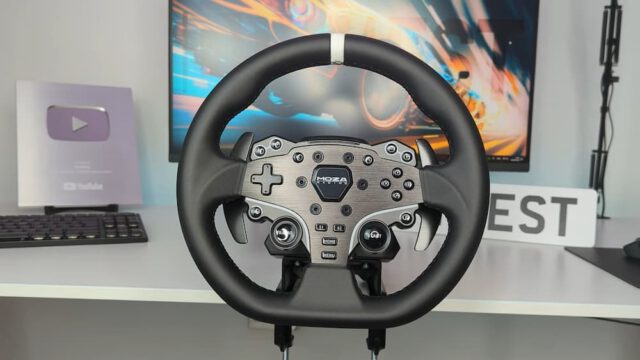
MOZA R5 Review: A True Next-Level Racing Wheel for Sim Enthusiasts
Upgrading to the MOZA R5 from a Logitech G29 or G923 can feel like going from a reliable compact...


The Pimax Crystal Light delivers excellent visual clarity for sim racing, but its heavy 800g build and bulky rear ergonomics compromise comfort.
After testing the Pimax Crystal Light for 30 days, specifically from the perspective of a VR newcomer focused on sim racing, it’s clear that the headset offers market-leading visual fidelity but suffers from significant ergonomic drawbacks when used in a dedicated rig.
Here is a breakdown of the performance, build quality, and usability.
The strongest selling point of the Pimax Crystal Light is the optical performance. For sim racing, where looking down track to spot breaking markers and apexes is critical, the headset performs exceptionally well.
During the testing period, the headset managed to maintain high frame rates on PC VR titles.
While sim racers primarily rely on wheels and pedals, the included controllers are surprisingly competent for menu navigation and setup.
Despite the visual prowess, the physical design presents major issues for sim racers using high-backed racing seats.
The headset features a prominent adjustment dial on the back of the strap. In a standard gaming chair or standing setup, this is negligible. However, in a sim racing seat where the user’s head rests against a headrest, the dial protrudes significantly. This forces the user to either lean forward (compromising posture) or endure the dial digging into the back of the head.
Weighing in at approximately 800g, the Crystal Light is heavy compared to competitors like the Bigscreen Beyond.
The tethered nature of the device introduces friction. The cable routing can snag on the seat or rig during head movements. While this is standard for PC VR, the specific routing on this unit requires careful cable management planning to avoid immersion-breaking tugs.
The pass-through camera functionality is strictly utilitarian and falls short of modern standards set by the Meta Quest 3.
The Pimax Crystal Light is a specialized tool that prioritizes raw visual specifications over comfort.
Recommended For:
Not Recommended For:
Questions and answers about the Pimax Crystal Light
No. The Pimax Crystal Light uses inside-out tracking with built-in cameras, meaning it tracks your head movement without external sensors.
While the official minimum specs are lower, to run modern sims like Assetto Corsa Competizione or iRacing at the full native resolution and 120Hz, you realistically need a high-end GPU, ideally a NVIDIA RTX 4090 or 4080 Super, and an AMD Ryzen 7 7800X3D or Intel Core i9 to prevent bottlenecks
For visual fidelity, yes. The Crystal Light connects directly via DisplayPort, meaning you get a raw, uncompressed image. The Quest 3 uses USB-C or Wi-Fi streaming, which can introduce compression artifacts (blurriness at high speeds). However, the Quest 3 has superior edge-to-edge lens clarity and a much lighter, more comfortable design.
Yes. The adjustment hub on the back of the headstrap is bulky. If you use a bucket seat with a high headrest, you may feel the dial digging into your head.
The headset supports a manual physical IPD (Interpupillary Distance) adjustment range of 58mm to 72mm. You can adjust this using a toggle on the top of the headset, and the exact value will appear on the screen to help you dial it in perfectly.
Yes, relatively. While it is significantly lighter than the original Pimax Crystal (dropping from ~1.1kg to roughly 815g), it is still heavier than competitors like the Meta Quest 3 (~515g). The weight is front-heavy, which can cause neck fatigue during long races. However, the rigid strap design does a decent job of balancing this weight if you take the time to fit it correctly
No. The Crystal Light is a dedicated tethered PC VR headset. It does not have a battery or an internal processor (Snapdragon chip). It must remain connected to your PC via the DisplayPort cable at all times to function. If wireless play is a priority for you, this headset is not the right choice.
Updated July 08, 2025
Upgrading to the MOZA R5 from a Logitech G29 or G923 can feel like going from a reliable compact...
July 08, 2025
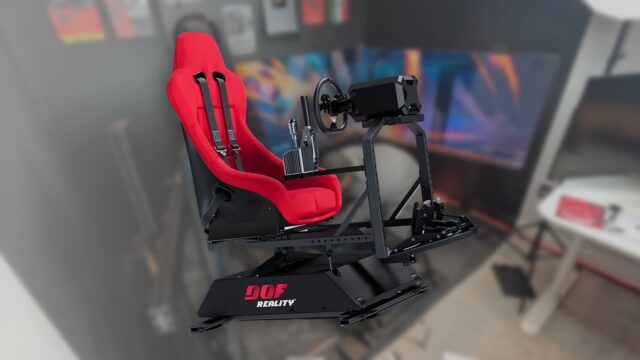
Setting up high-end sim racing gear can feel daunting, especially with a motion simulator like the...