Updated July 08, 2025
MOZA R5 Review: A True Next-Level Racing Wheel for Sim Enthusiasts
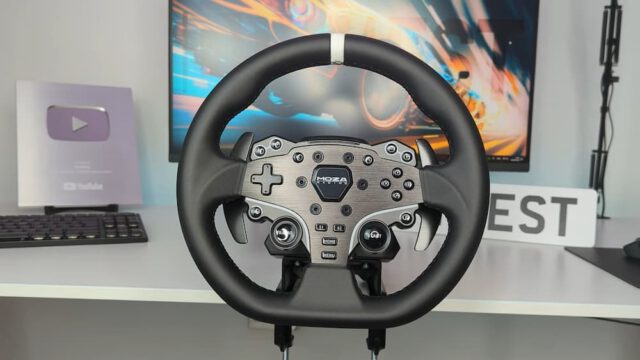
Upgrading to the MOZA R5 from a Logitech G29 or G923 can feel like going from a reliable compact...


The MOZA R16 Ultra Bundle is possibly the best wheelbase in Moza's line-up, with a tremendous price to performance ratio.
The Moza R16 Ultra lands in a really interesting spot. It brings 16 Nm of continuous torque, an updated chassis, improved thermal management, and a £499 price point that puts it much closer to the R12 than you might expect.
For anyone moving up from an entry-level direct drive wheelbase such as the R3, R5, or R5 Pro, this could be the upgrade that stops the usual gradual climb through the R9 and R12.
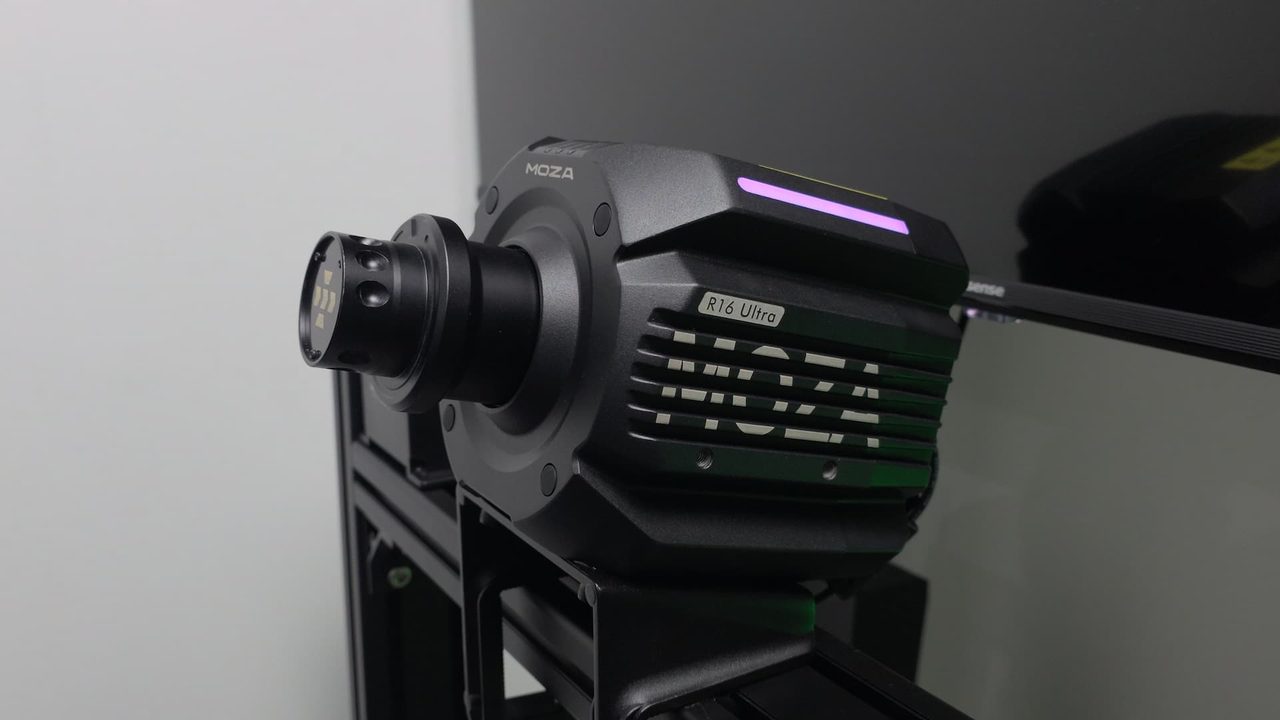
The R16 Ultra follows the design language of the R21 Ultra, R25 Ultra, and newer R5 Pro. You get Moza’s recognisable aluminium cooling fins, a compact chassis, and customisable RGB strips running along each side.
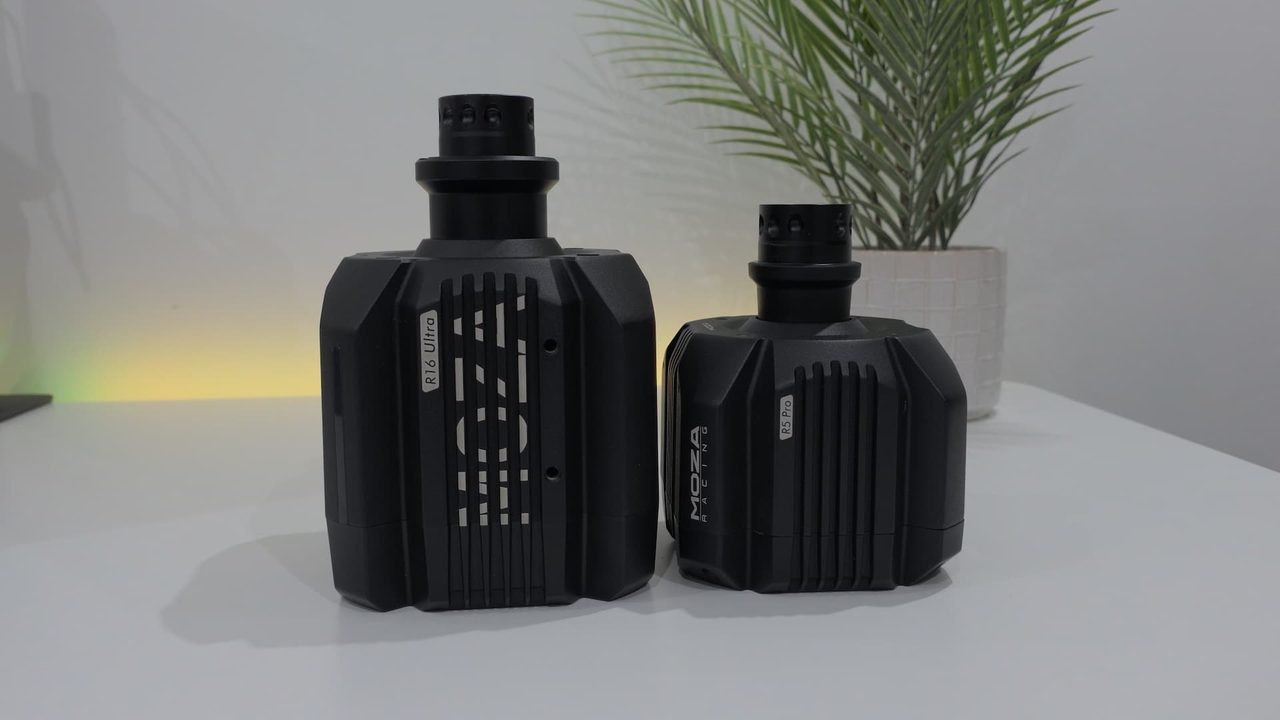
Put it next to the R5 Pro and the size difference is obvious, and at 6kg, it is not a lightweight wheelbase either. Make sure your sim rig or wheel deck is suitably rigid before mounting it.
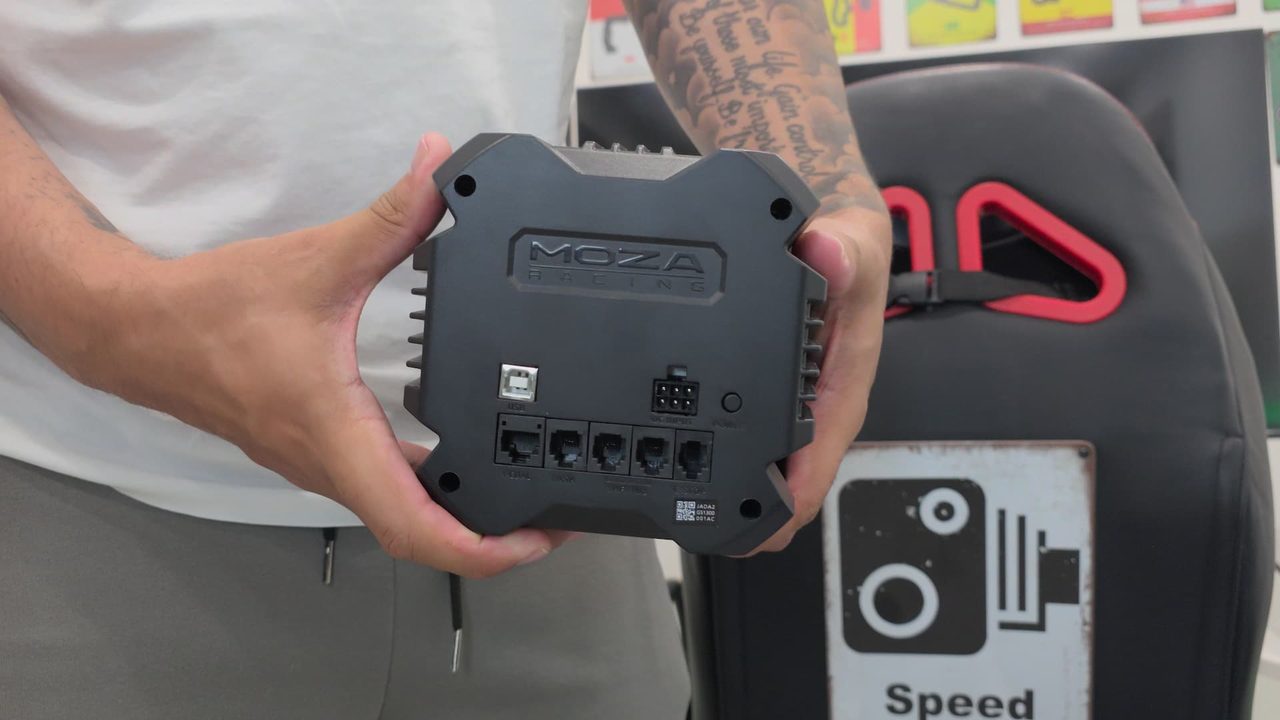
The rear panel provides the usual Moza connections for:
That makes it straightforward to build around if you are already using Moza hardware or planning a more complete sim racing setup.
Moza uses a zero-cogging flat-wire motor in the R16 Ultra. To be honest, the smoother motor feel is mainly noticeable when the wheelbase is switched off and you are rotating the shaft with your fingers. It is not the sort of thing that transforms the force feedback experience on its own.
Where the flat-wire design matters more is in what it enables:
That thermal efficiency is particularly important with a 16 Nm wheelbase. Strong force feedback can generate serious heat over longer stints, so maintaining consistent output matters more than chasing a peak figure for a few seconds.
The headline number here is 16 Nm of continuous torque, not a short peak burst. That is a huge jump for anyone coming from a lower powered wheelbase.
I ran an R5 at 100% power for the last two years, but with the R16 Ultra, I’m running at roughly 60% force feedback strength because full output is simply too much to handle comfortably without time to adjust. This can be done by having FFB strength set to 100% in Moza Pithouse and then lowering the FFB gain in-game to 60%.
The difference is not subtle. With both the R5 Pro and R16 Ultra set to 100% in Moza Pit House, the R16 has enough force during a crash that I struggle hold onto the steering wheel when it hits the barrier.
A simple string test makes the point even clearer. The R5 Pro’s wheel rotation can be stopped with a piece of string. The R16 Ultra snaps it instantly.
This level of force feedback is immersive, but it also needs respect. During a collision, keeping a firm grip on the wheel can put your wrists and thumbs at risk. A powerful direct drive wheelbase can move fast enough and hard enough to cause a real injury.
Build up your force feedback gradually, use sensible in-game settings, and avoid fighting the wheel through major impacts. The extra strength is there to communicate detail and weight, not to prove how much force you can endure.
Sim racing has an upgrade bug. It is easy to begin with an R3 or R5, then start looking at an R9 or R12 once you want more detail, weight, and headroom.
On paper, the R16 Ultra could have become an awkward middle option between the R12 and Moza’s higher-output bases. At its current pricing, though, it makes a compelling case for skipping a stage.
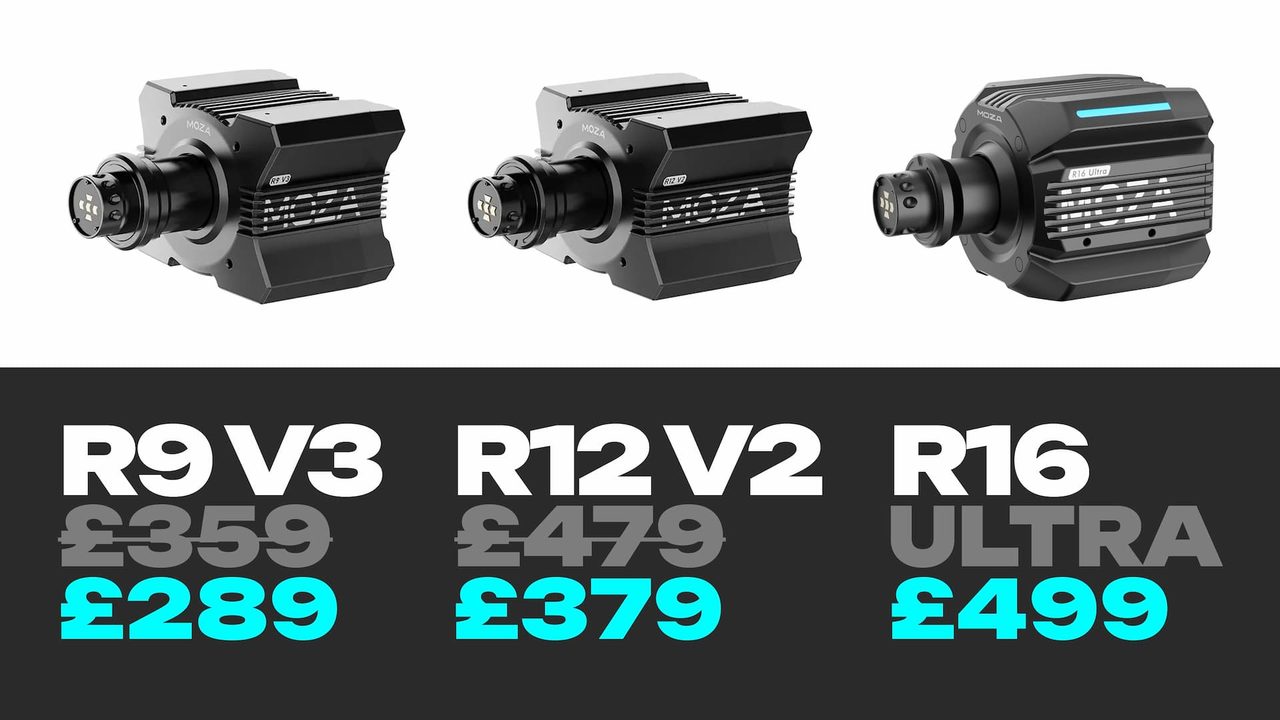
At the discounted prices discussed here, the range looks like this:
That means the R16 Ultra is only £120 more than the R12 V2. For that extra spend, you get 4 additional newton metres of continuous power, stronger thermal capability, and the updated Ultra chassis.
That is what makes the R12 harder to justify for a buyer who already knows they want a long-term direct drive setup. The jump from 12 Nm to 16 Nm is meaningful, not merely a small specification bump.
If you are happy with a lower-powered wheelbase and do not need more force feedback headroom, the R9 and R12 still certainly have their place. Not everyone needs 16 Nm, and a properly configured lower-torque base can still be brilliant to drive with.
But if you are upgrading from an R5 class wheelbase and want to make one major move rather than multiple smaller ones, the R16 Ultra makes a lot of sense. It offers a massive increase in available force, a newer design, efficient cooling, and strong value relative to the R12.
At £499, this is not just an R16 with a refreshed look. It’s potentially the wheelbase that makes skipping the R9 and R12 the smarter upgrade path.
Questions you may have about the Moza R16 Ultra.
Desk mounting is not recommended. At 6kg with 16 Nm of continuous torque, this base produces immense rotational force. Using a clamp on a standard desk risks noticeable flex, slippage or potential damage. The R16 Ultra should be bolted to a dedicated wheel deck or a rigid aluminum profile rig.
The price difference between the R12 V2 (~£379) and the R16 Ultra (£499) is only £120. That incremental cost gets 4 extra Nm of continuous power, superior thermal headroom, and the updated Ultra chassis. For drivers planning a long-term setup, spending slightly more upfront eliminates the itch to upgrade again in a year or two.
Keep torque output set to 100% inside Moza Pit House to preserve the full dynamic range of signal detail, but dial down the force feedback gain in-game to around 50-60%. This keeps rich telemetry detail while capping violent crash spikes to help avoid twisting your wrists or thumbs.
While the smooth motor rotation is mostly noticeable when turning the shaft by hand with the wheelbase powered off, its real advantage lies in efficiency. Flat-wire winding reduces internal resistance and heat, enabling the wheelbase to run demanding 16 Nm loads continuously during long stints without thermal throttling or loss of force precision.
Updated July 08, 2025
Upgrading to the MOZA R5 from a Logitech G29 or G923 can feel like going from a reliable compact...
July 08, 2025
Setting up high-end sim racing gear can feel daunting, especially with a motion simulator like the...