Updated July 08, 2025
MOZA R5 Review: A True Next-Level Racing Wheel for Sim Enthusiasts
Upgrading to the MOZA R5 from a Logitech G29 or G923 can feel like going from a reliable compact...
The PXN VD6 looks like the obvious choice on paper. For £349, you get a direct drive wheelbase, a feature-packed steering wheel, all metal pedals and a brake performance kit included in the box. The Moza R5 Pro bundle costs about £40 more, and I would budget another £39 for its brake performance kit, bringing the comparison price to £428.
Both sit in the 6 Nm class, but similar torque figures do not translate into similar driving experiences. After testing them back to back on both a desk and a sim rig, the difference in force feedback was much bigger than I expected.
PXN supplied the VD6 for this test and I compared the bundles across six categories: steering wheels, pedals, wheelbase hardware, mounting, ecosystem and force feedback. PXN has some genuine advantages, but Moza comes out ahead where it matters most to me.
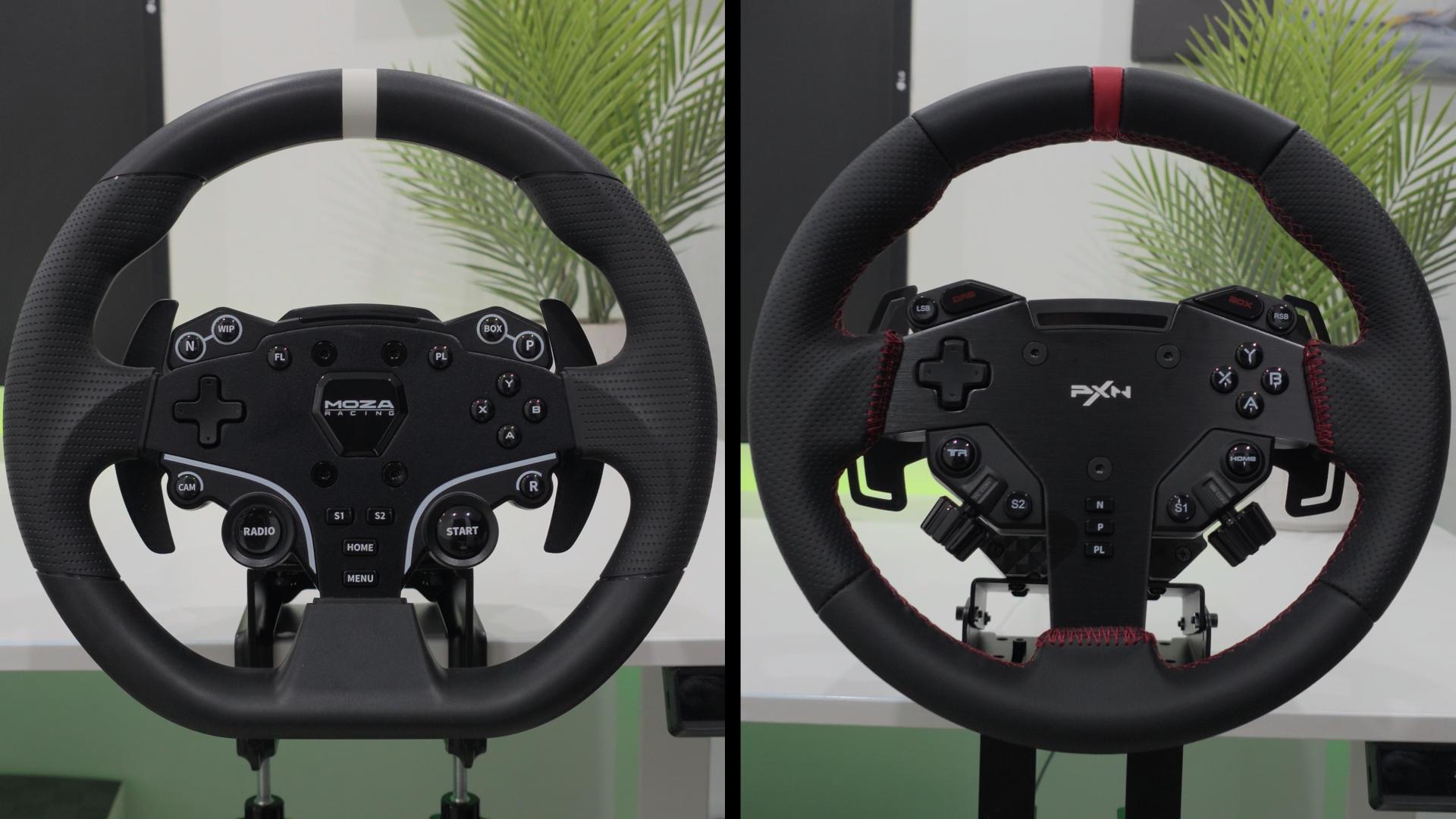
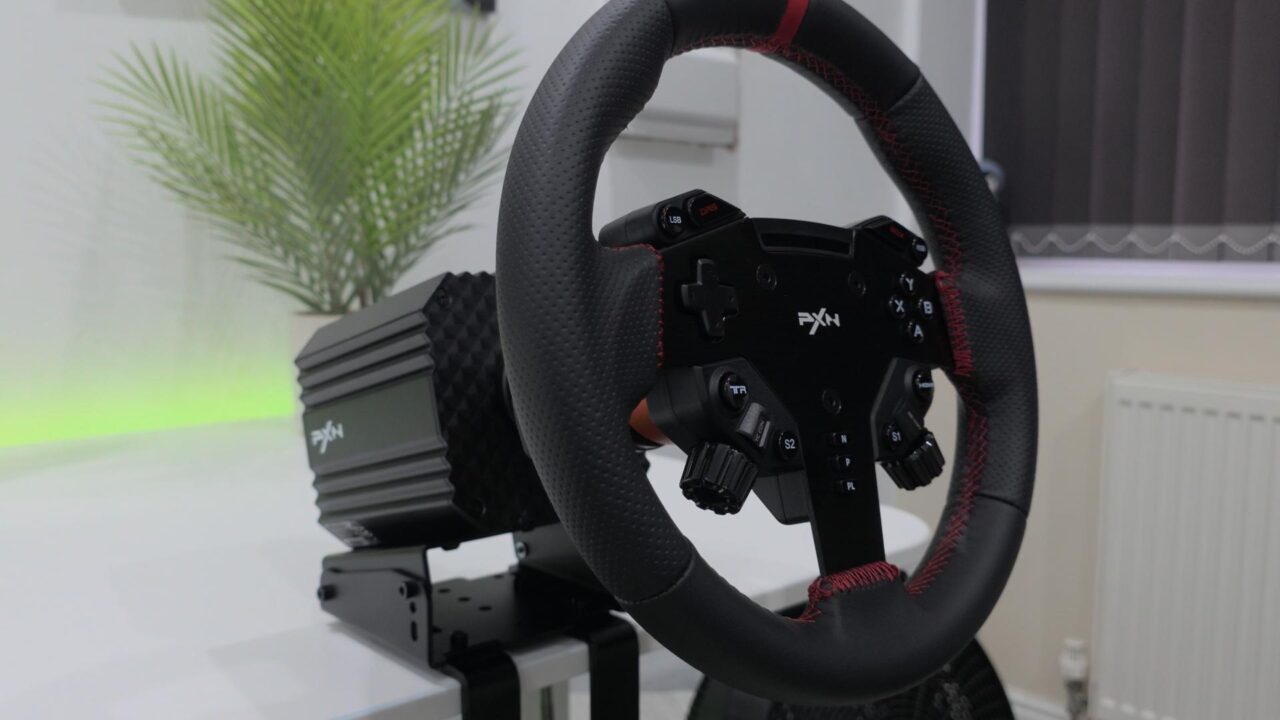
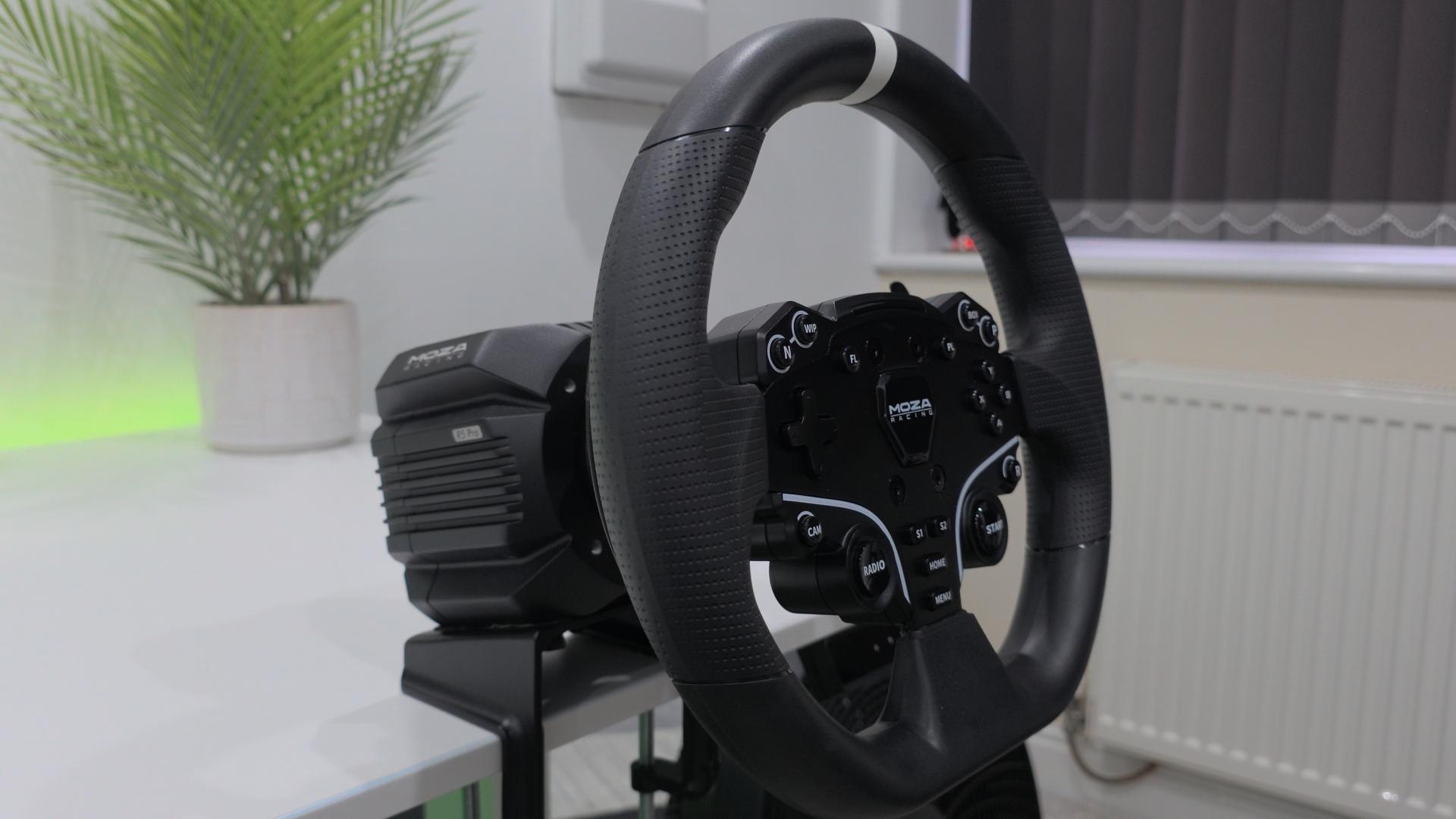
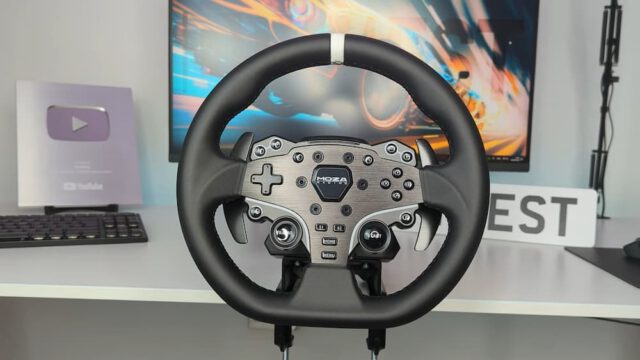
Both bundles include a 280 mm steering wheel, and at first glance they look fairly evenly matched. Pick them up, though, and the PXN W AS feels noticeably lighter than Moza’s ES Lite.
The actual weight difference is only 109 grams. Their quick releases look almost identical, and the central sections have a similar design, so I suspect much of that difference comes from the rim materials. More importantly, the PXN wheel feels hollower in the hand, which becomes relevant when comparing how vibrations reach your hands.
PXN has packed controls into the W AS that I would normally expect on a more expensive standalone wheel:
Moza’s ES Lite gives you 22 buttons and a similar RPM light bar, but there are no rotary dials. Its two aluminium shifter paddles are also non-magnetic, and you do not get the additional analogue clutch paddles.
For an entry-level bundle, PXN deserves credit here. The extra controls are a substantial part of its appeal, rather than just a longer specification sheet.
The W AS is wrapped in hand-stitched ultra-fibre leather. It looks quite premium, but the impression changes once you hold it. The rim feels hollow and slightly cheap, and the stitching is not particularly consistent. That leaves me questioning how well it will hold up under heavy use, although this test does not establish its long-term durability.
Moza takes a simpler approach with TPE soft-touch rubber grips. They are not fancy, but they feel dense, grippy and solid. I would rather have that reassuring feel for long racing sessions than a more expensive looking finish that does not feel as convincing.
There is also a shape difference. PXN’s round rim is more versatile for drifting and rally, while Moza’s flat-bottom design is more suited to GT and Formula-style driving.
My winner: Moza. PXN offers more controls, but I would have preferred fewer premium features and a more premium-feeling rim. The ES Lite’s solid construction and grip give it the edge.
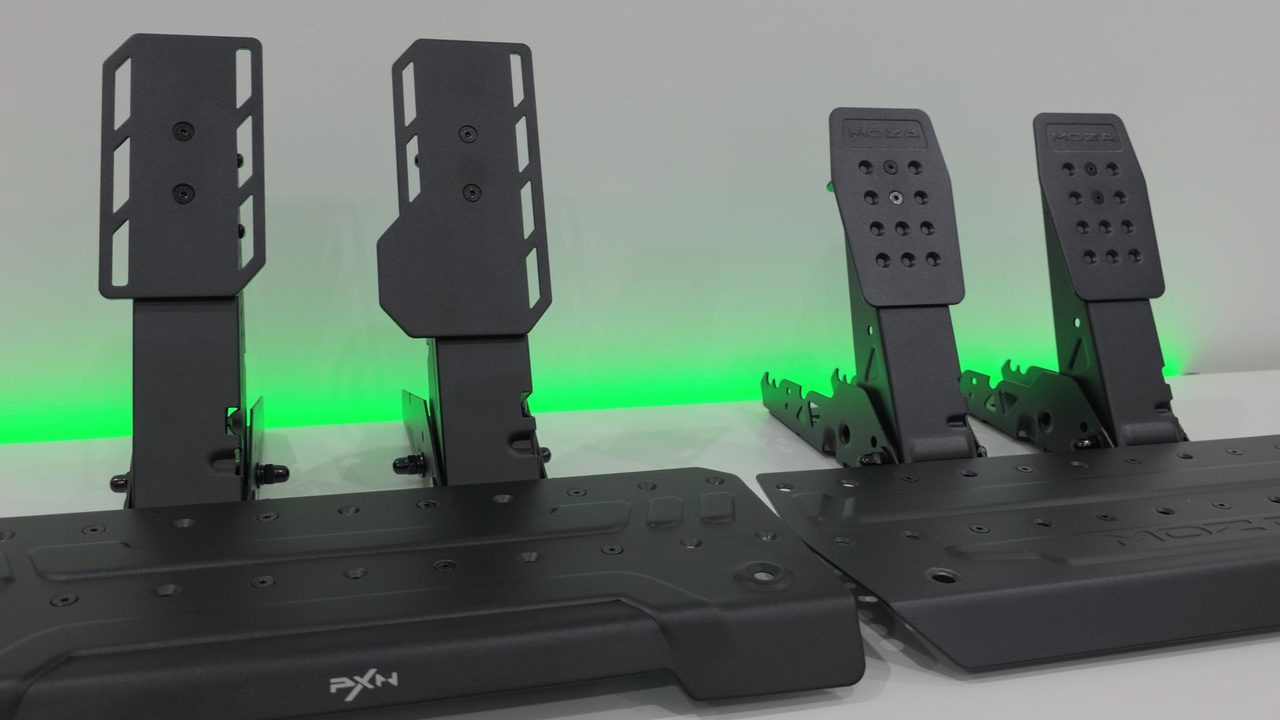
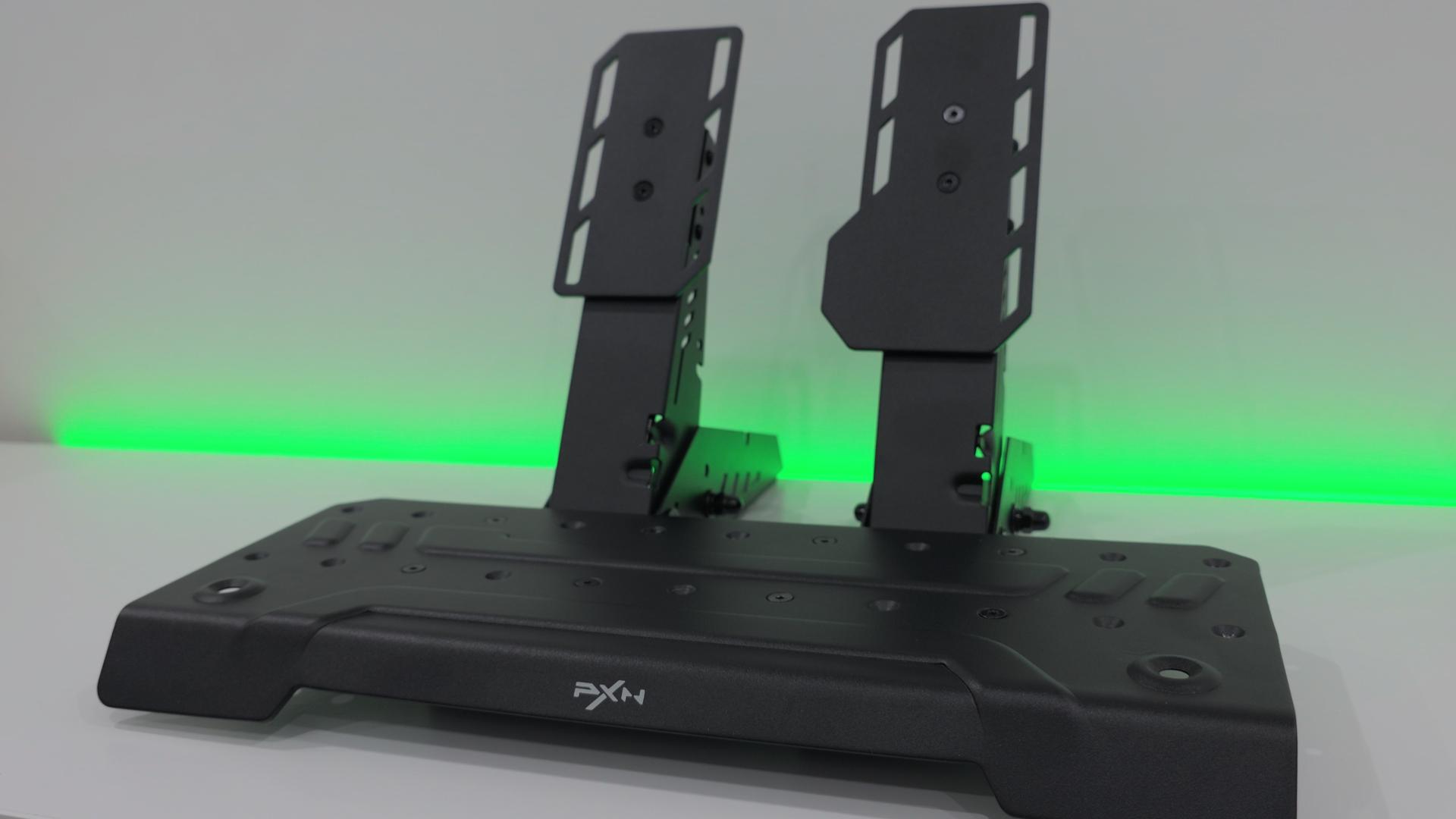
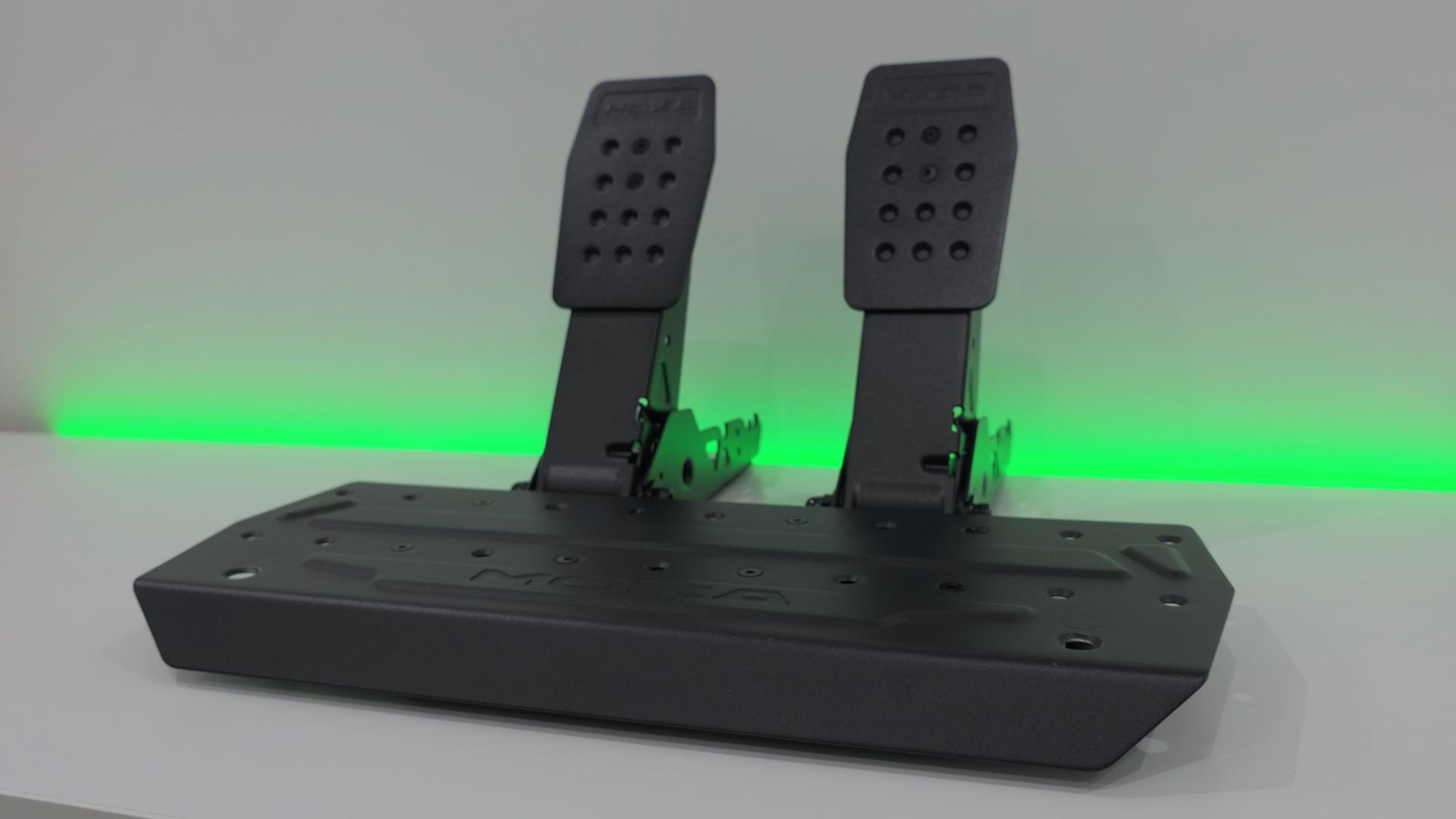
The pedal comparison swings things back towards PXN. The VD6 includes PD HM pedals, while the R5 Pro bundle includes Moza’s SR-P Lite 2 pedals.
Both sets have solid all-metal frames, a throttle and brake, provision for an optional clutch, and Hall-effect magnetic sensors.
There is useful adjustment on both sets. You can move the faceplates vertically and alter the spacing between the pedals. Moza also allows diagonal faceplate repositioning, whereas PXN lets you adjust the faceplate angle.
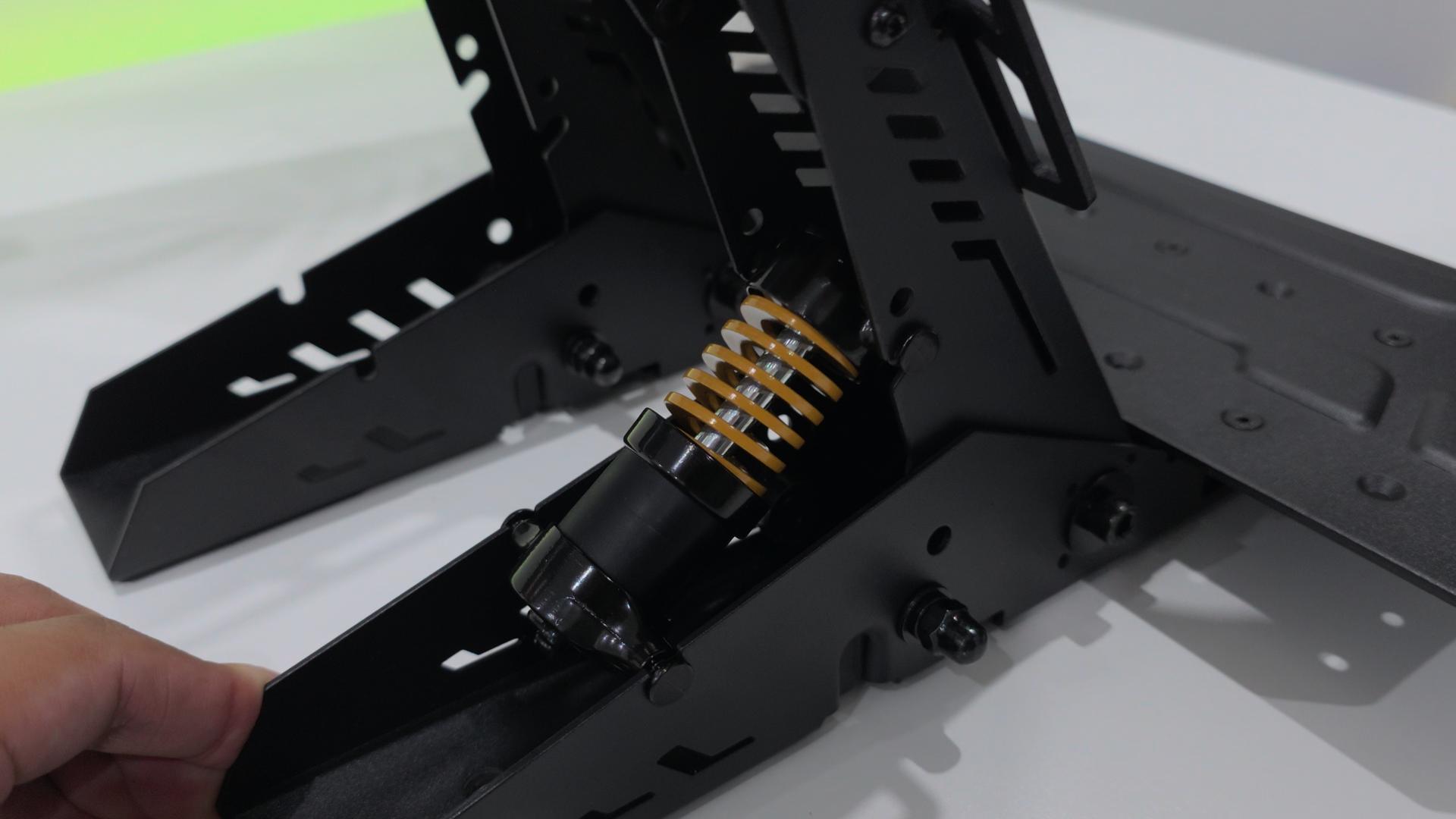
Moza’s SR-P Lite 2 brake comes with stiffer springs, but its throttle has very little resistance. Even with the firmer stock brake spring, I still find the brake too light, particularly when driving without ABS.
That is why I would strongly recommend factoring Moza’s £39 Brake Performance Kit into the purchase price. The stock pedal set is not the configuration I would choose to keep.
PXN fits stiffer springs to both the throttle and brake. Better still, its brake performance kit is included, providing progressive resistance up to a stated 20 kg braking force without an additional purchase.
The faceplates are another nice touch. PXN uses an asymmetrical pair, with a wider, taller throttle plate and a narrower brake plate. I like that distinction for smooth throttle inputs and precise braking. Moza uses two identical stamped-steel plates.
My winner: PXN. Stronger stock resistance and an included brake performance kit make its pedals the more complete package straight out of the box.
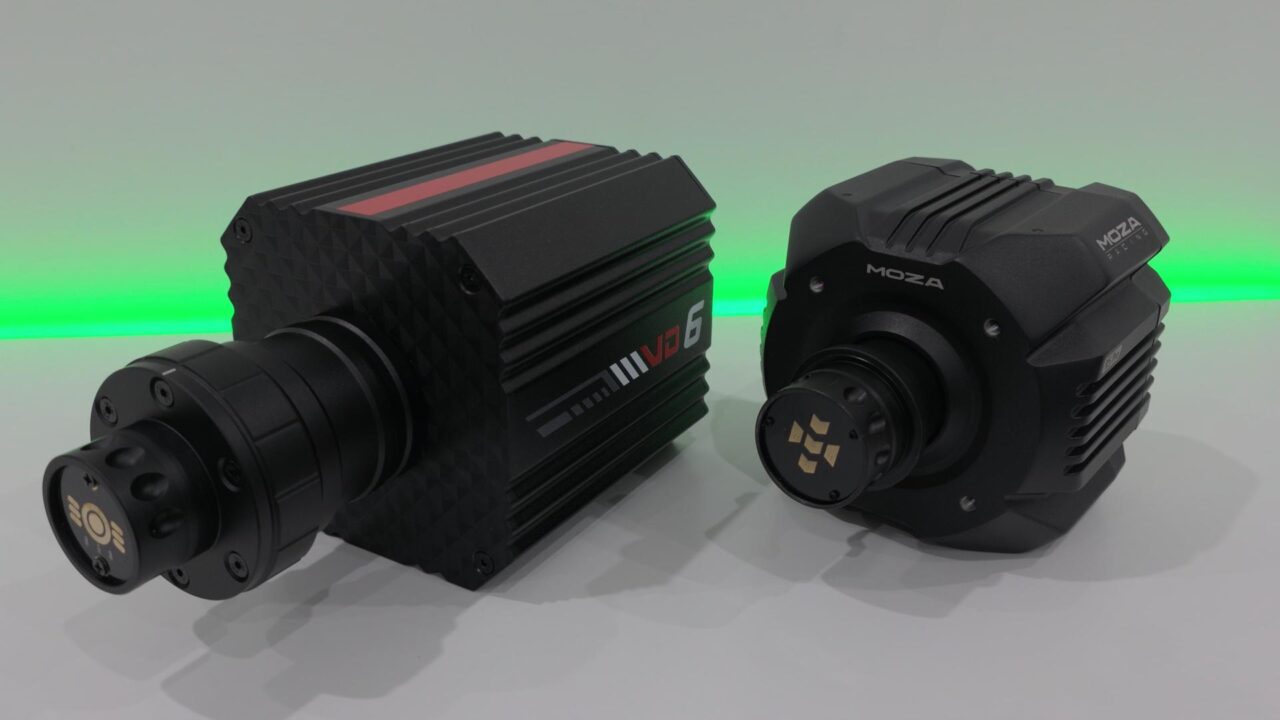
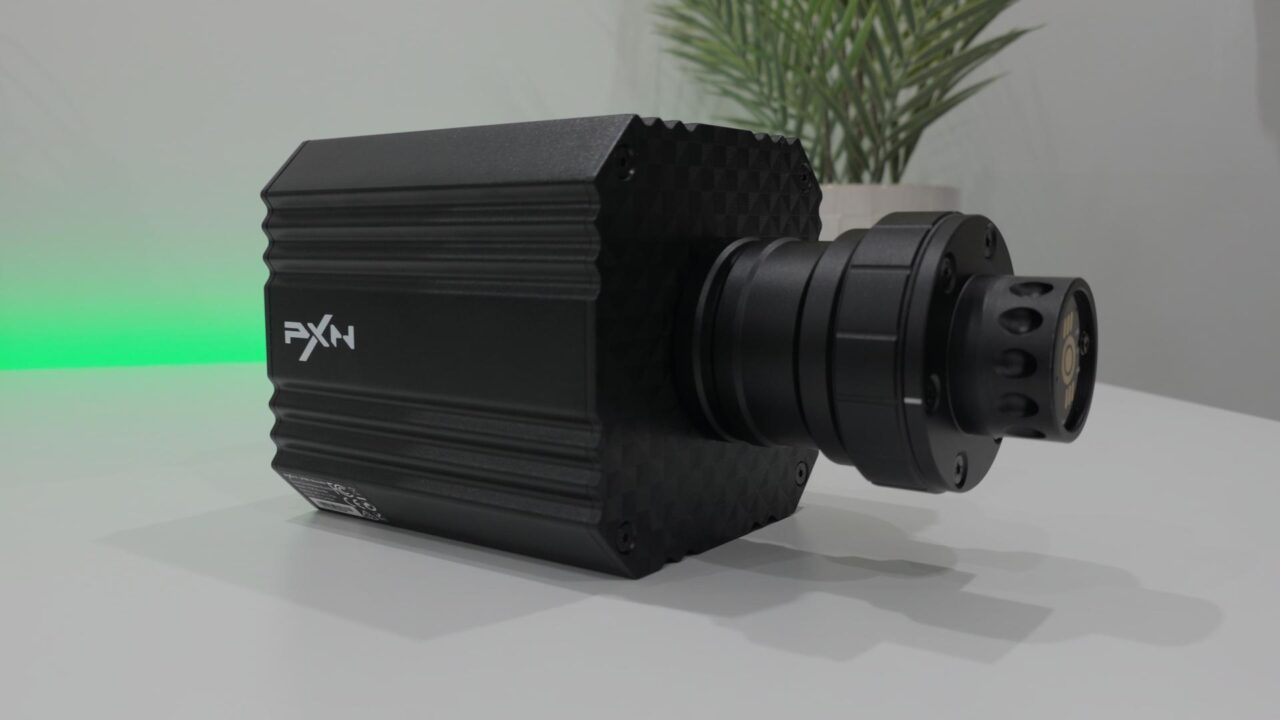
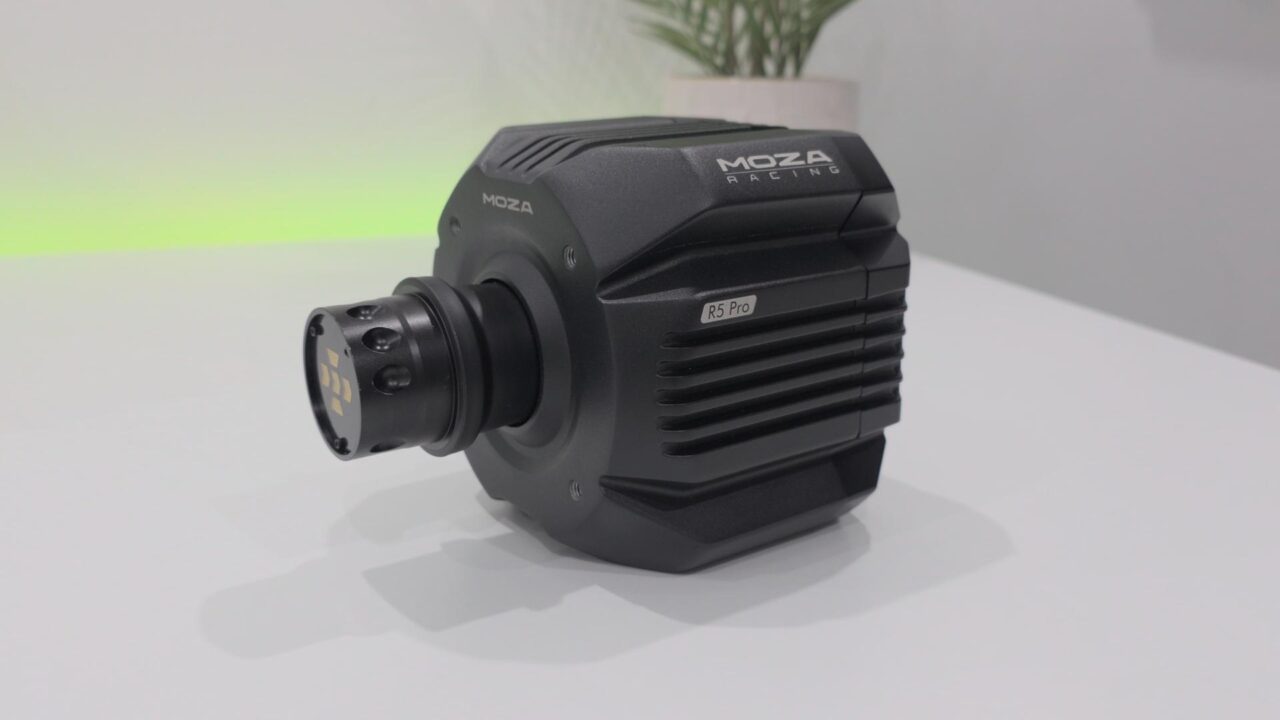
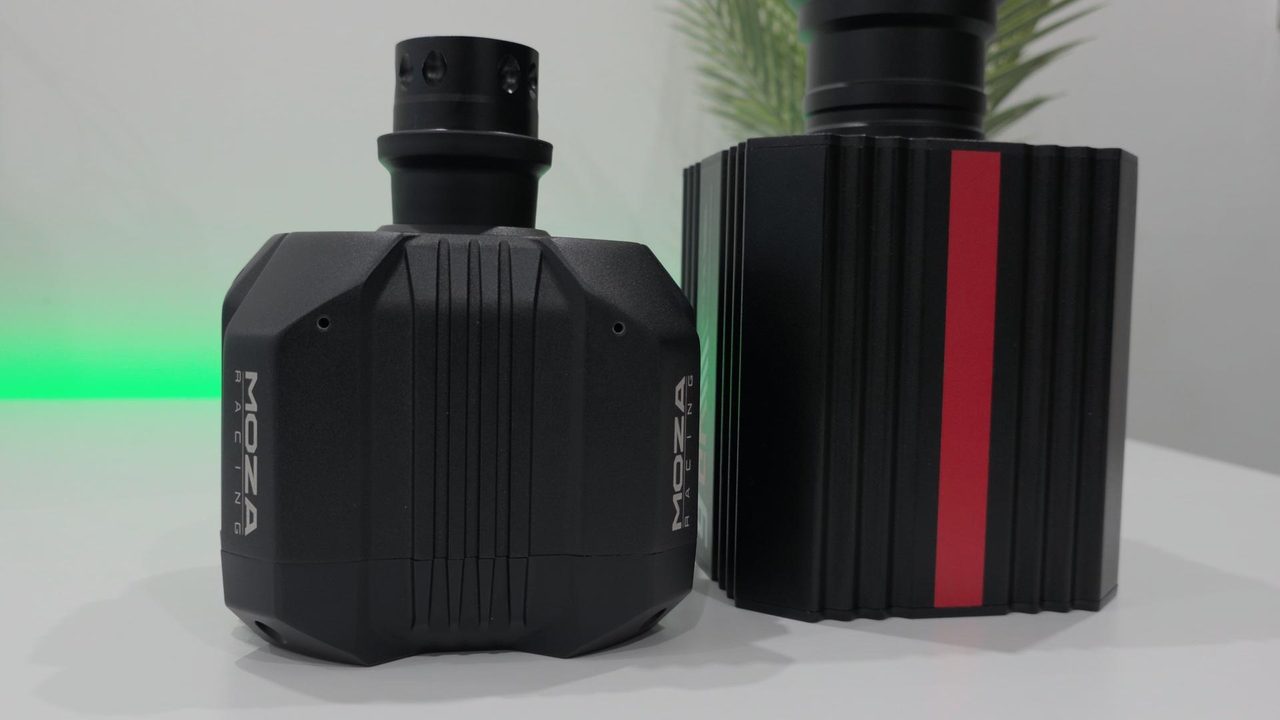
This category is about the physical wheelbase, not force feedback performance. In terms of size and appearance, the two bases could hardly be more different.
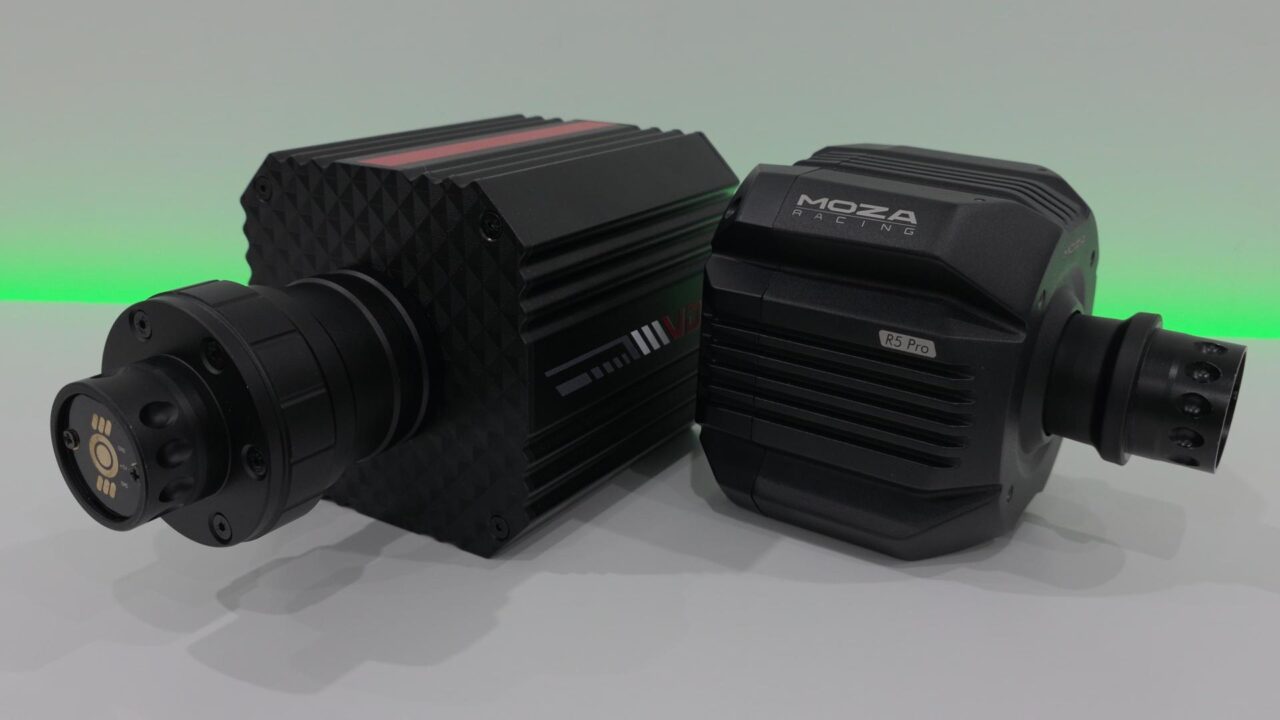
The R5 Pro is an extremely compact, rounded cube that takes up little space. The VD6 is a much larger, heavier box. It has a substantial presence on a desk or rig, and I prefer its bold styling.
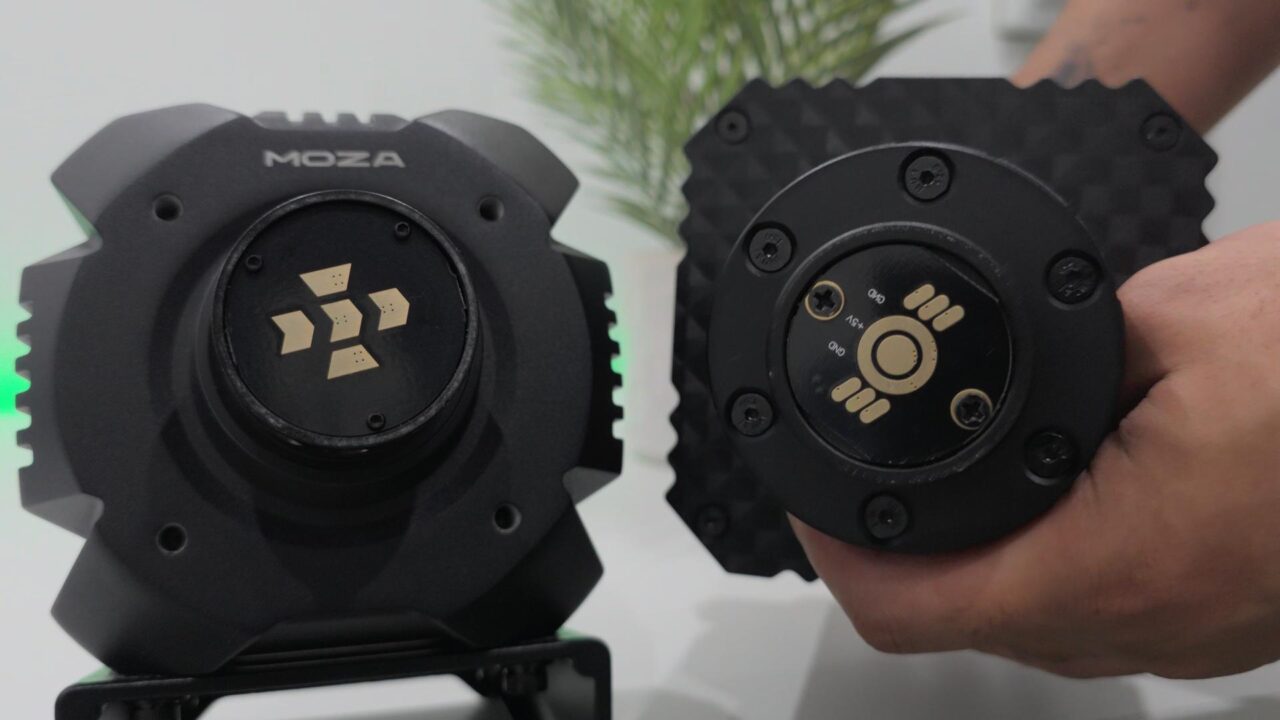
The VD6’s size comes with a practical benefit: a much longer steering shaft. It effectively gives you an extended shaft as part of the standard hardware.
That extra length creates clearance behind the wheel, which is useful for monitor placement and desktop mounting. Getting comparable clearance from Moza’s shorter shaft requires an extension accessory.
Moza’s housing is entirely aviation-grade aluminium alloy on the front and sides. PXN also uses aluminium alloy, but its front and rear end plates are carbon-patterned plastic.
So, if exterior material quality is the priority, Moza wins. PXN’s design appeals to me more visually, but its carbon-patterned ends should not be confused with an all-metal enclosure.
At the rear, PXN uses USB-C ports for the pedals, shifter, peripherals and PC data connection. Moza uses RJ-style clip connectors for its accessory connections. The VD6’s USB-C layout is a welcome part of its hardware package.
My winner: PXN. Moza has the higher-quality housing, but PXN’s extra shaft clearance and styling give it the point for me.
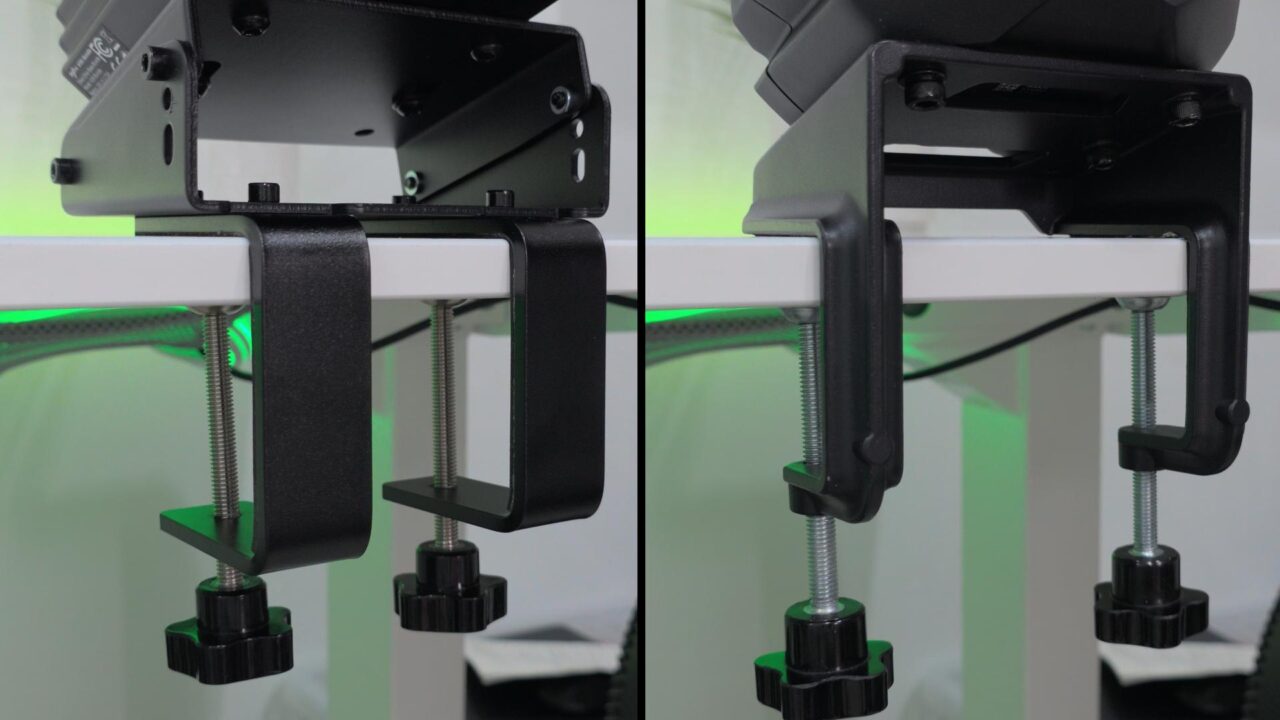
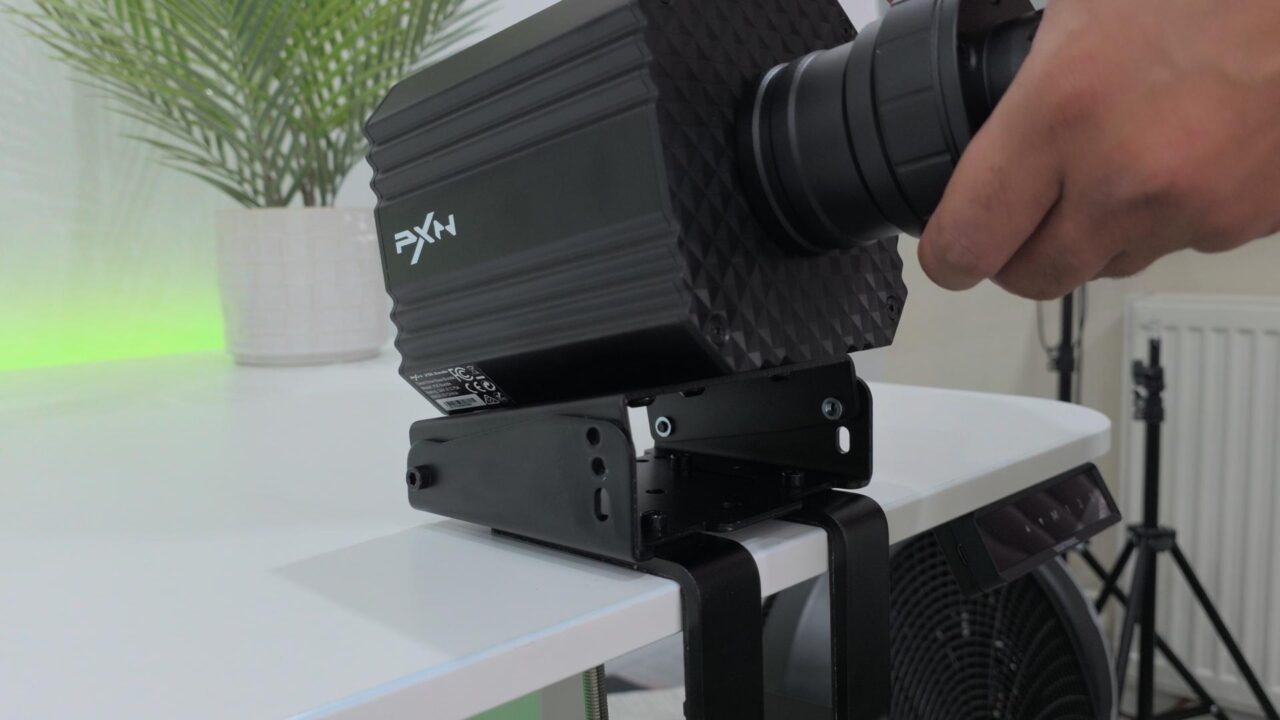
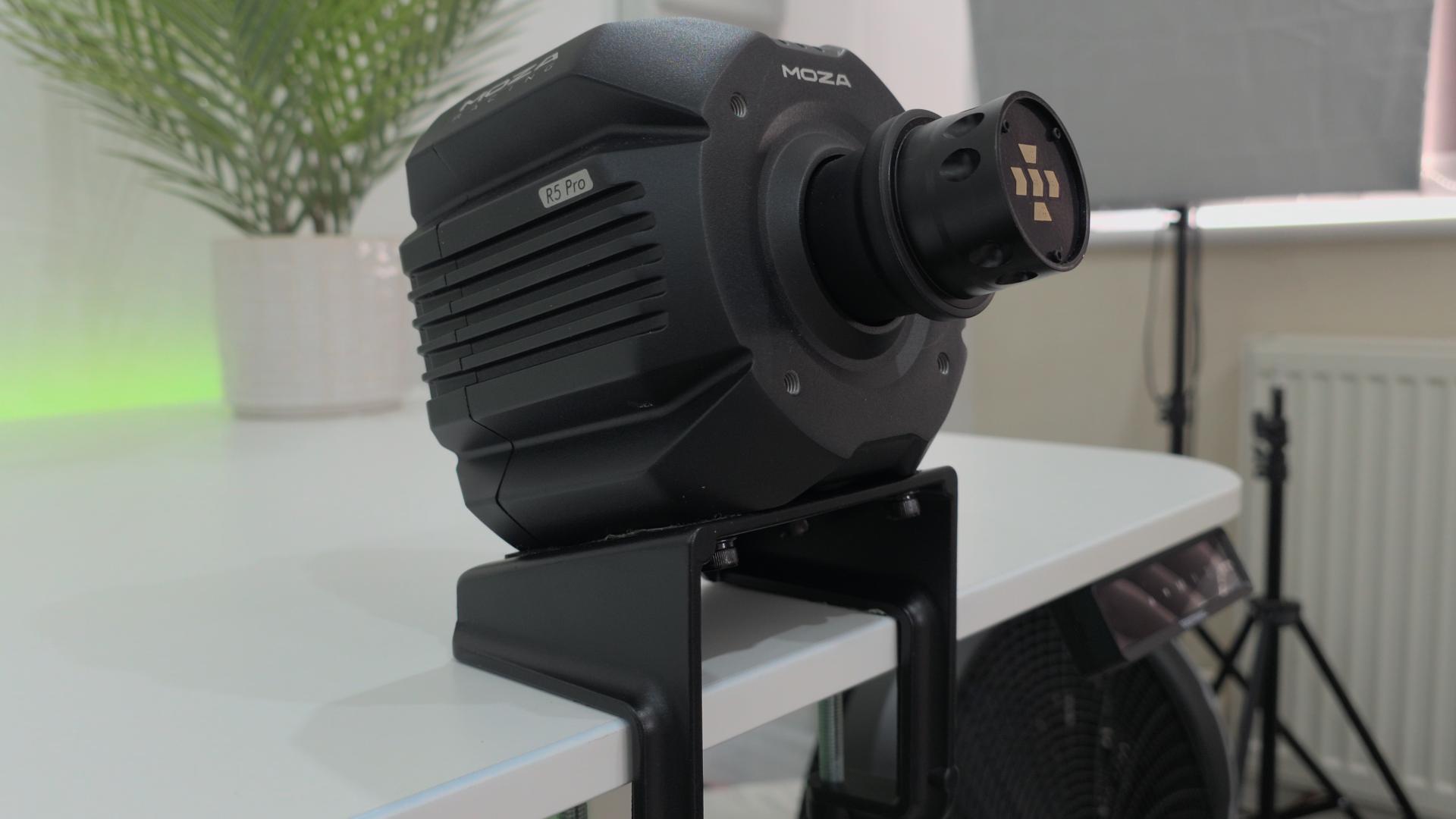
PXN’s mounting system should have been an easy win. It’s modular, offers multi-stage tilt adjustment, and lets you remove the clamp legs and hard-mount the base plate to a rig using standard T-nuts.
Moza supplies a heavy-gauge desk clamp. It has no tilt adjustment, and using that supplied mounting arrangement on a rig involves the C-clamp legs, which is not ideal.
On paper, PXN is more flexible. In actual desktop use, however, the clamp lets the whole package down.
The metal arms on the VD6 clamp legs are too thin. As I tighten the pressure screws against the desk, the brackets visibly flex and bend outwards.
That prevents me from getting sufficient clamping force. The base then twists from side to side during driving, to the point that I find the supplied desktop mounting setup effectively unusable.
A direct drive base needs to stay planted. Tilt adjustment is useful, but it cannot compensate for a mount that moves when you put steering force through it.
The R5 Pro clamp lacks PXN’s adjustment, but its frame has no flex in my testing. Once tightened, it stays solid, even when I throw the car hard into a corner.
Hard-mount the VD6 to a rig and its desktop clamp weakness is no longer the deciding factor. In that setting, PXN’s removable legs and base-plate mounting arrangement are real advantages.
My winners: Moza for desk users, PXN for rig users. This is the category where your installation matters most. PXN’s adaptable design works well for a rig, but Moza’s rigid clamp is the clear choice for a desk.
A direct drive bundle can be the start of a much larger sim racing setup. If you plan to add specialised wheels and accessories over the next couple of years, the ecosystem deserves attention before you buy.
This is where Moza pulls comfortably ahead. At the time of this comparison, it offers more than 12 wheel options, with further choices available if you include older second-hand models.
The upgrade options also go beyond steering wheels. Moza’s range includes native digital dashboards, haptic feedback accessories and trucking hardware, including a trucking wheel and realistic indicator controls.
PXN is making progress with the VD series, but its ecosystem is still relatively young. The physical quick release uses a standard ball-lock pattern, yet mechanically attaching a third-party wheel is not the same as having seamlessly integrated controls.
Expanding to third-party wheels requires external USB adapters rather than the integrated wireless communication available within a native setup. That makes the upgrade route less straightforward.
My winner: Moza. If this bundle is the foundation for a growing rig, Moza offers a broader and easier path to expand it.
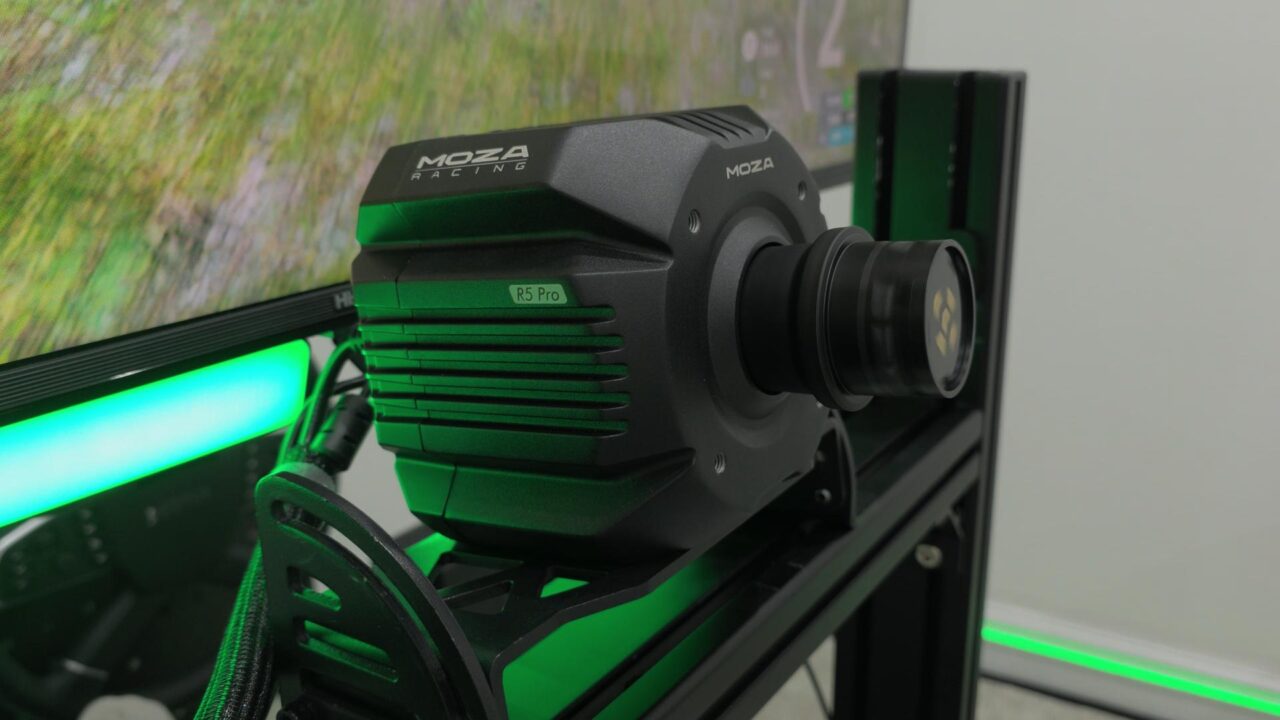
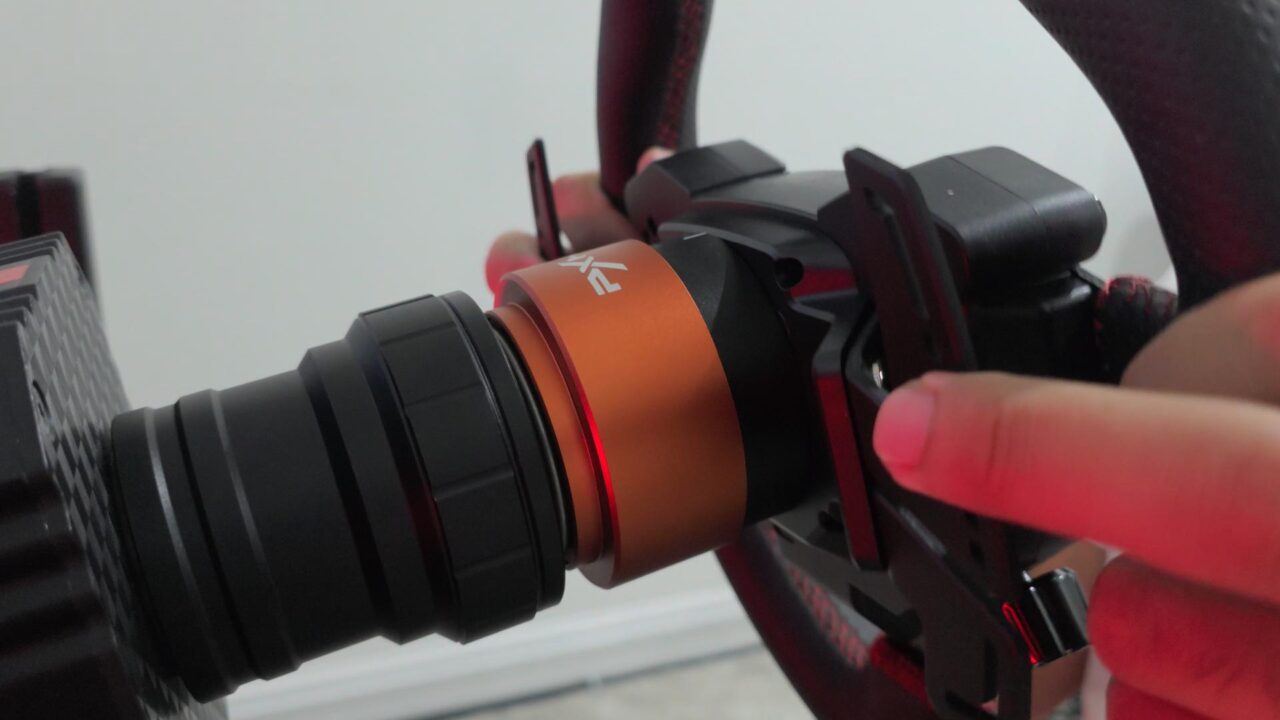
This is the biggest difference between the bundles, and ultimately the one that decides the comparison for me.
I tested both on a desk and a rig. Wheelbase software force feedback and torque were set to 100%, with in-game force feedback tested at both 70% and 100%. I avoided additional artificial effects to compare their relatively unprocessed feedback.
The PXN VD6 feels light both on straights and through corners. Along a straight at Monza, there is very little information about what the road surface is doing.
At 70% in-game force feedback, that detail is almost absent. I have to raise the game setting to 100% to get what I consider basic steering resistance.
The feedback becomes more noticeable when turning or running over kerbs, but I still want more resistance. Initially, I wondered whether that was simply what I should expect from a base in this 6Nm torque class.
Switching to Moza makes it clear that it is not.
On the same sort of straight, the R5 Pro communicates small road-surface forces pulling the steering slightly left and right. Through corners, its resistance feels stronger and deeper, while vibrations arrive more solidly through my hands.
The difference is not just steering weight. Moza gives me more usable information and a more substantial sense of connection to the car.
The W AS wheel’s hollow-feeling construction seems to contribute to the thinness of the feedback. To explore that, I tried Moza’s ES Lite on the VD6. The PXN base immediately felt better. Vibrations had more depth with the Moza rim, although the result still did not reach the R5 Pro’s level.
That does not prove the exact reason for the difference, but it supports my impression that the rim itself is part of the problem. The wheelbase and wheel need to be considered together, not just as separate items on a specification sheet.
PXN’s app includes a setting to increase detail. In my testing, turning it up mostly amplified the same thin-feeling vibration and introduced a rattling sound from the W AS wheel. It didn’t produce the richer feedback I wanted.
The VD6 is specified at 6 Nm constant torque with a 7 Nm peak, while the R5 Pro’s stated peak is 6 Nm. PXN also lists a 24-bit magnetic encoder against Moza’s 21-bit encoder.
Based on those figures, I expected PXN to have the advantage. Instead, Moza delivered noticeably stronger-feeling steering and clearer raw detail.
My impression is that Moza’s force feedback processing, including its algorithms and 600 MHz processor, is doing the work here. This is not a measured explanation of the performance gap, but it is a reminder that higher headline specifications do not automatically produce better feedback.
My winner: Moza. In these back-to-back tests, the driving experiences were not particularly close. The R5 Pro gave me stronger resistance and much better detail.
The prices used for this comparison put the PXN VD6 at $359 and the Moza R5 Pro bundle at approximately $399. Add the Moza brake performance kit I recommend, and its practical comparison cost becomes $438, or $79 more than PXN.
| Category | Winner | Main reason |
|---|---|---|
| Steering wheel | Moza | More solid rim feel and better grips |
| Pedals | PXN | Stronger stock resistance and included brake kit |
| Wheelbase hardware | PXN | Longer shaft clearance and preferred styling |
| Mounting | Moza on a desk; PXN on a rig | Desk-clamp rigidity versus adaptable hard mounting |
| Ecosystem | Moza | Broader native wheel and accessory options |
| Force feedback | Moza | Stronger-feeling resistance and clearer detail |
Counting both installation specific mounting gives Moza four points and PXN three. The scores look close, but the categories do not carry equal weight in the driving experience.
PXN gives you plenty for the money: better stock pedals, an included brake kit, a long steering shaft, USB-C connections and a wheel with magnetic shifters, analogue clutch paddles and rotary encoders.
If you already have a rig and prioritise getting the most hardware for the lowest price, those are meaningful advantages. Coming from a non-direct drive wheelbase, I would still expect the VD6 to feel like a welcome upgrade.
The problem becomes apparent when you compare it directly with the R5 Pro. Its cheaper-feeling rim, flexing desktop clamp and weaker-feeling FFB make the savings less compelling.
Moza costs more, and the brake performance kit adds to that difference. In return, you get a solid desktop mount, a more convincing wheel, a much broader ecosystem and, most importantly, a stronger and more detailed direct drive experience.
The Moza R5 Pro is my overall recommendation. PXN wins on several useful features and offers excellent value on paper. Moza delivers the better setup where I feel it every lap… through the steering wheel.


Updated July 08, 2025
Upgrading to the MOZA R5 from a Logitech G29 or G923 can feel like going from a reliable compact...
July 08, 2025
Setting up high-end sim racing gear can feel daunting, especially with a motion simulator like the...